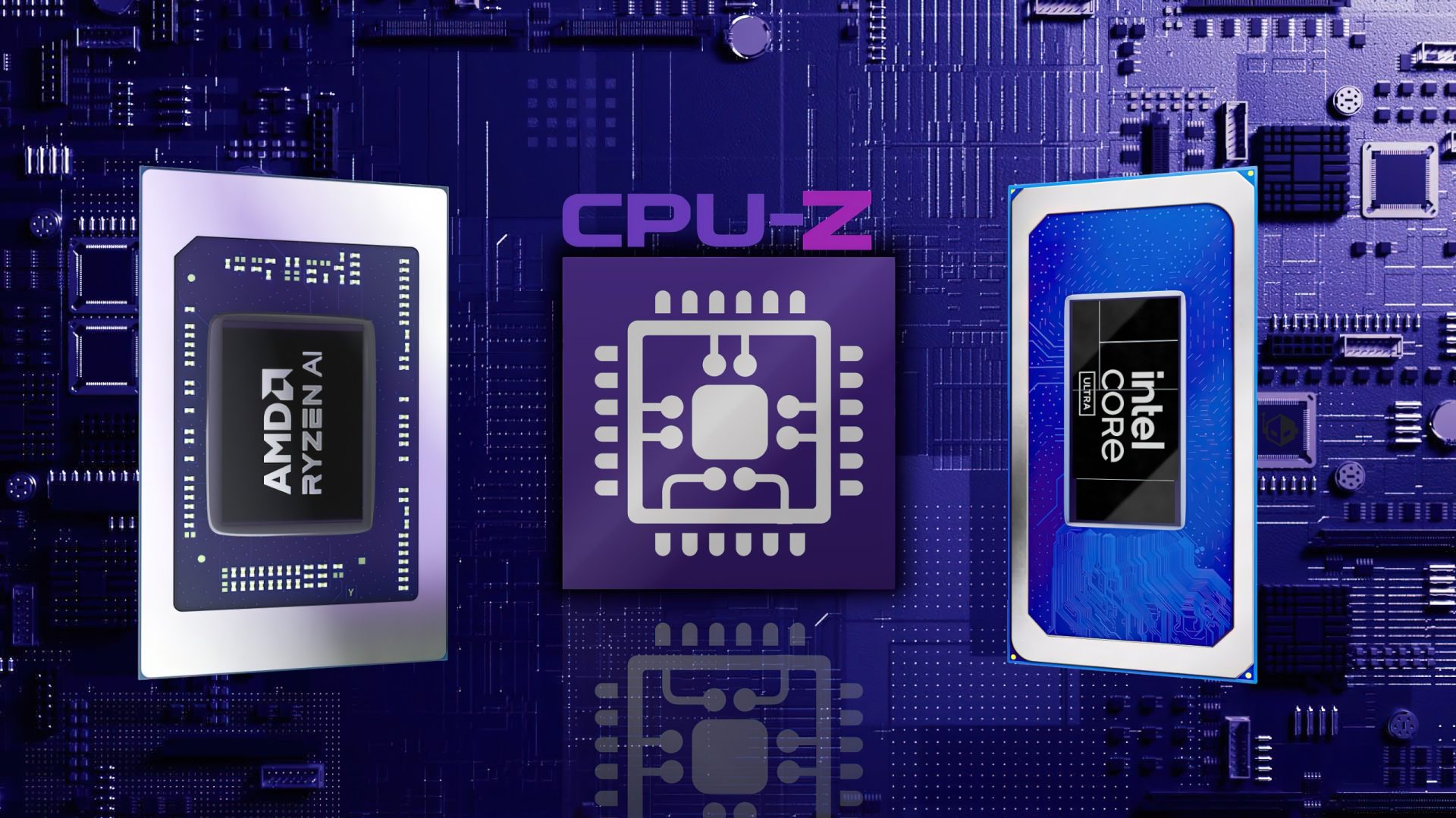
IT teams managing high-performance workloads face a critical choice: which processor will serve them best in the coming years, especially as AI demands rise. The recent addition of AMD's Ryzen AI 400G and 400GE series, alongside Intel's Wildcat Lake processors, to CPU-Z software offers an early glimpse into their capabilities—and how they stack up against the competition.
The Ryzen AI chips, codenamed 'Rembrandt,' bring integrated graphics and AI acceleration to the table. They feature up to 8 cores and 16 threads, with clock speeds reaching 4.5 GHz on the base model and 5.0 GHz on the Pro variant. The Wildcat Lake series, Intel's response, pushes core counts higher—up to 24 cores and 32 threads—with a focus on raw performance in both single-threaded and multi-threaded tasks.
Both series share a common goal: to integrate AI capabilities more deeply into mainstream computing. AMD's approach leverages its existing Zen architecture, adding AI-specific instructions (like those found in the Ryzen 7040 series) while maintaining compatibility with existing software ecosystems. Intel, on the other hand, is betting on its advanced process nodes and hybrid core design to deliver sustained performance gains, particularly in workloads that benefit from high core counts.
For IT teams, the decision hinges on balance. AMD's Ryzen AI chips offer a more integrated solution, ideal for environments where power efficiency and AI acceleration are priorities. Intel's Wildcat Lake, with its higher core counts and aggressive clock speeds, may appeal to those who prioritize brute-force performance over efficiency. The choice will ultimately depend on the specific workloads and long-term scalability needs.
As AI becomes more embedded in enterprise workflows, processors like these will play a pivotal role in determining how quickly organizations can adapt. For now, the support in CPU-Z is an early indicator of their readiness to enter the market, but real-world benchmarks will be needed to confirm which platform truly stands out.