The Paranormal Investigator Challenge in LEGO Batman: Legacy of the Dark Knight* is one of the game’s most intricate and rewarding puzzles. Unlike standard side missions, it demands a specific sequence of actions, item collection, and environmental navigation—all while maintaining focus under time constraints. The challenge itself is a test of memory, observation, and quick reflexes, designed to feel like a high-stakes detective case rather than a typical LEGO game obstacle.
To complete it, players must first gather four distinct items scattered across Gotham’s rooftops and alleyways. These items are not immediately obvious; they require careful scanning of the environment, often hidden in plain sight behind seemingly mundane objects or within hard-to-reach ledges. Missing even one item means restarting the sequence from scratch, a frustration that adds tension to an otherwise lighthearted experience.
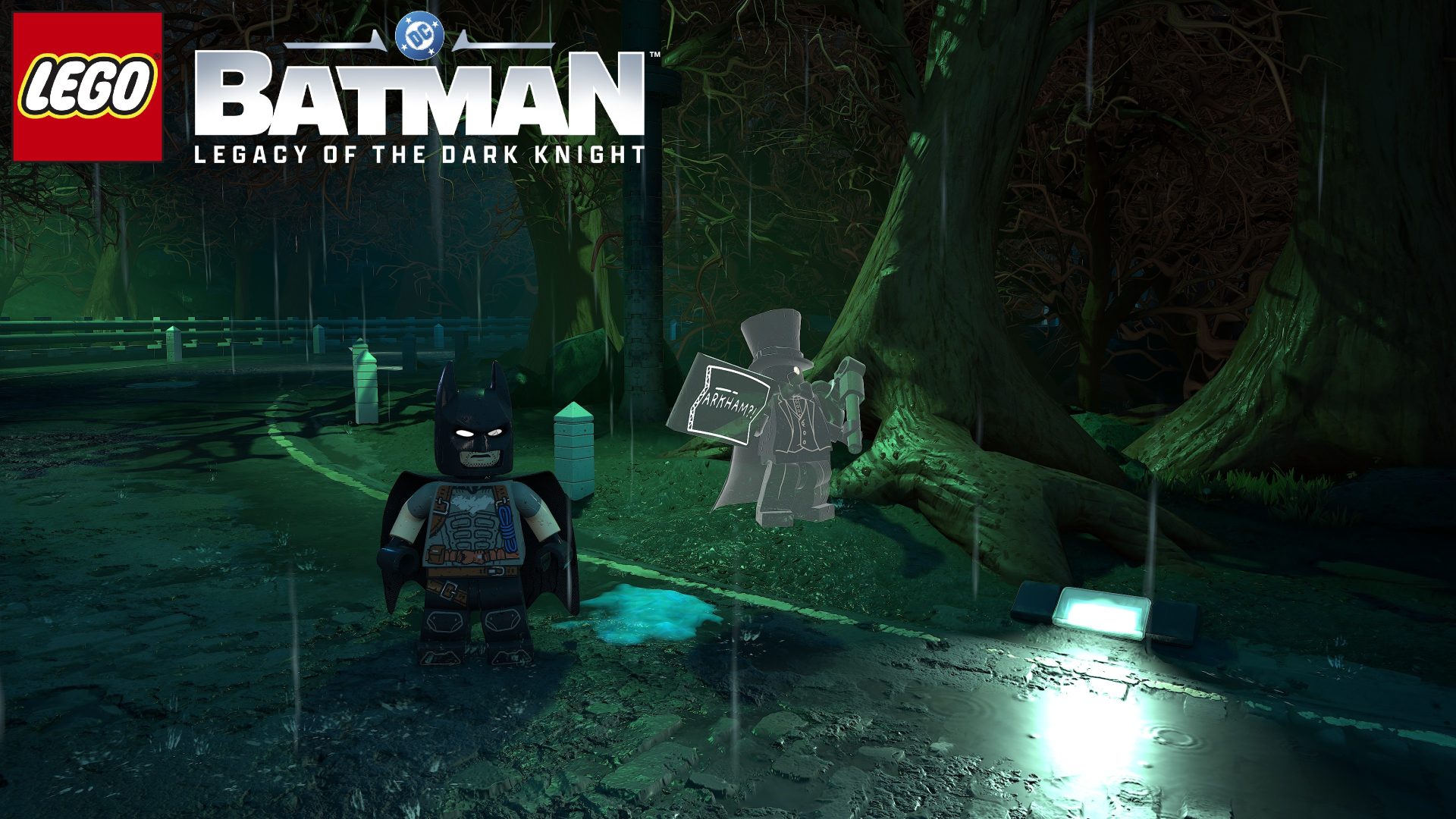
The real complexity lies in the challenge’s structure. Unlike linear missions, it operates on a loop: players must return to a central location after collecting each item, where a timer begins counting down. This creates a sense of urgency that contrasts sharply with the game’s usual relaxed pacing. The final confrontation, which involves dodging and countering attacks from a spectral opponent, is the culmination of this buildup—demanding not just speed but also precision in button presses.
What Makes This Challenge Stand Out
The Paranormal Investigator Challenge is notable for its departure from traditional LEGO game design. Most side activities in the series are straightforward, with clear objectives and generous checkpoints. Here, the challenge is deliberately opaque, rewarding players who approach it methodically rather than those who rely on brute-force trial and error.
- Items must be collected in a specific order, though the game does not explicitly state what that order is—players deduce it through experimentation or external guidance.
- The timer introduces a pressure mechanic rare in LEGO games, forcing players to balance exploration with efficiency.
- The final confrontation tests both agility and timing, requiring players to memorize attack patterns while under time constraints.
This design choice reflects a broader trend in modern game challenges: blending accessibility with difficulty. It’s a puzzle that feels fair yet punishing if approached carelessly, striking a balance that many players find engaging rather than frustrating. However, the lack of in-game hints or tutorials means that those new to LEGO games—or even experienced players unfamiliar with this specific challenge—may struggle without external assistance.
A Reality Check: Limitations and Frustrations
Despite its clever design, the Paranormal Investigator Challenge is not without its flaws. The most glaring issue is its lack of transparency. Players are left to piece together the correct sequence through trial and error, which can feel like a step backward in an era where games often guide players more explicitly. Additionally, the timer’s countdown can be jarring, especially for those used to LEGO’s forgiving gameplay loop.
The challenge also assumes a level of familiarity with the game’s mechanics that not all players possess. For example, understanding how to navigate Gotham’s vertical spaces efficiently is crucial, yet this is rarely explained in-game. This creates a learning curve that some may find steep, particularly if they’re new to LEGO’s open-world design.
Why This Challenge Matters
The Paranormal Investigator Challenge serves as a microcosm of LEGO Batman*’s broader strengths and weaknesses. On one hand, it showcases the game’s ability to innovate within its established formula, introducing complexity where others might rely on simplicity. On the other, it highlights the risks of overcomplicating what is fundamentally a family-friendly experience.
For players who embrace the challenge, the reward is substantial: a sense of accomplishment that few LEGO game missions can match. It’s a moment where the game shifts from being a casual pastime to something more akin to a skill-based test—a transition that feels both refreshing and necessary in an industry often content with repeating familiar patterns.
Ultimately, the Paranormal Investigator Challenge is a testament to the potential of LEGO games when they push boundaries. It asks players to engage deeply, rewarding those who do so without alienating those who prefer a more straightforward experience. Whether it succeeds in that balance depends largely on the player’s patience and willingness to unravel its mysteries—but for those who persist, the payoff is undeniable.