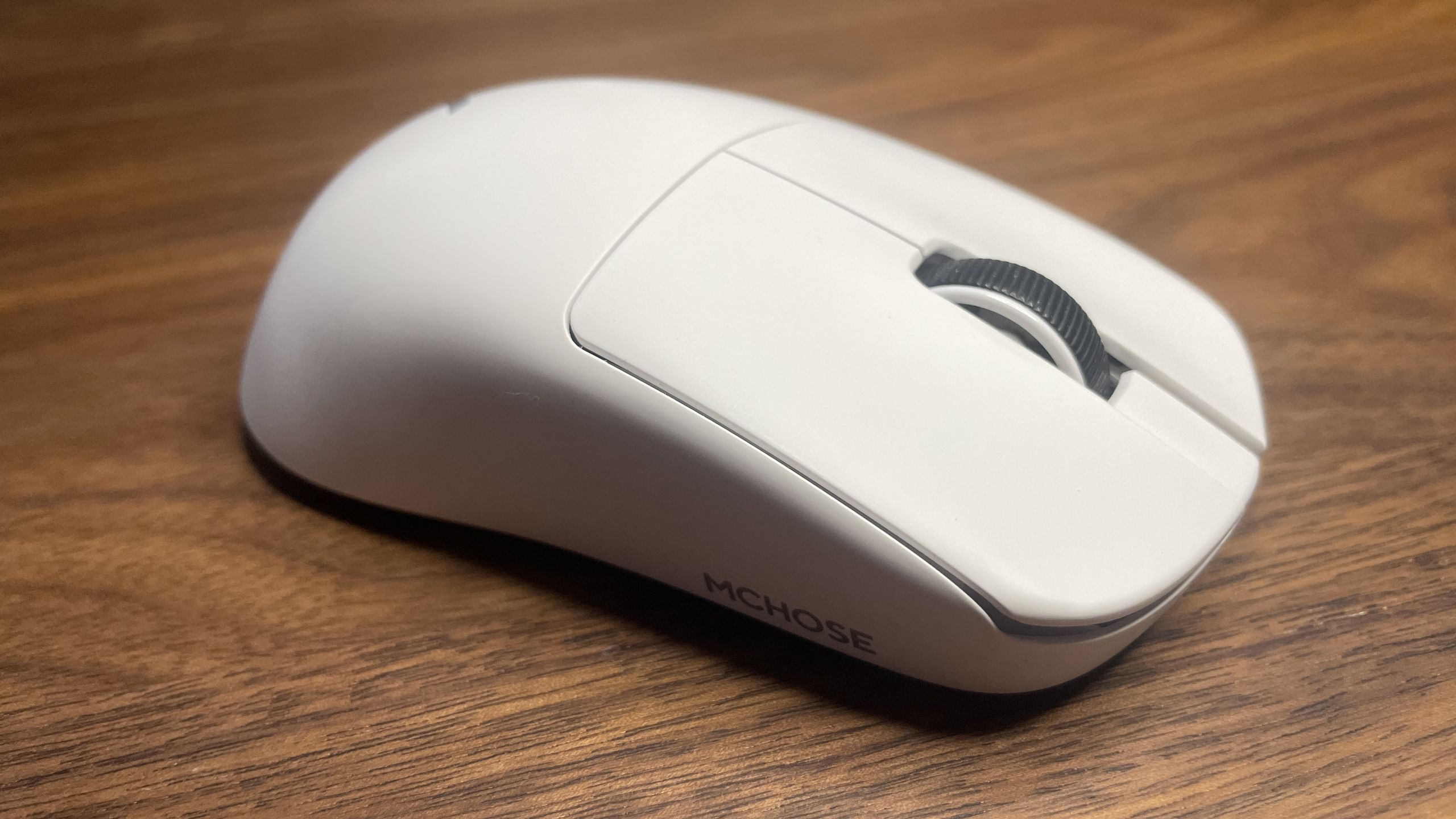
There’s a quiet revolution happening in gaming mice. It doesn’t involve groundbreaking tech or unheard-of specs—just the realization that you don’t need to spend $180 to get a mouse capable of competitive performance. The latest example? The Mchose L7 Pro+, a wireless mouse that borrows its shape from a $180 rival, packs in a $180 sensor, and sells for $60. That’s not a typo. The question isn’t whether it’s good—it is—but whether it’s better than its pricier counterparts, and for whom.
The L7 Pro+ isn’t just another budget mouse. It’s a direct challenge to the idea that competitive gaming mice must cost a fortune. Its design mirrors the Pulsar X2 CrazyLight Medium, a mouse that retails for triple the price. The hump at the back favors claw grippers, the weight is a featherlight 43 grams, and the wireless 2.4 GHz connectivity (plus Bluetooth) means no cords to tangle. Yet for all its similarities to high-end mice, it skips some of the premium frills—like RGB lighting—that often justify the extra cost.
What people might expect
- A mouse this cheap would feel cheap—plastic clicks, janky tracking, or a sensor that can’t keep up with faster rivals.
- Wireless performance would suffer noticeably compared to wired, with visible lag or inconsistency.
- The software would be clunky or limited, lacking the fine-tuning options found in $180 mice.
- Battery life would be an afterthought, forcing constant recharging mid-session.
What’s actually changing
The L7 Pro+ flips these assumptions on their head. Its PixArt PAW3395 sensor—the same chip found in mice three times its price—delivers 26,000 DPI, 650 IPS, and a 50 G acceleration cap, all hallmarks of high-end competitive mice. The 8,000 Hz polling rate is adjustable, and the tracking remains rock-solid whether wired or wireless, though lab tests reveal a slight but measurable drop in consistency over 2.4 GHz. In real-world use, though, the difference vanishes—no hitches, no stutter, just smooth movement.
The weight savings come at a minor cost: a faint creak if squeezed too hard, and clicks that feel slightly stiffer than premium mice. But these are nitpicks. The PTFE feet glide effortlessly on hard mouse pads, the Omron optical switches (or Kailh Black Green Dot alternatives) register every press without fail, and the USB-C dongle includes a handy battery indicator LED that glows red as juice depletes.
- Sensor: PixArt PAW3395
- Switches: Omron Optical / Kailh Black Green Dot
- Max DPI: 26,000
- Max Speed: 650 IPS
- Max Acceleration: 50 G
- Polling Rate: Up to 8,000 Hz
- Weight: 43 g
- Connectivity: USB-C (wired), 2.4 GHz wireless, Bluetooth
- Battery Life: 70+ hours @ 1 kHz
- RGB: No
- Price: $60 (L7 Pro+), $100 (standard L7)
This isn’t just about specs, though. The software is a standout—offering both browser-based and local versions, with granular controls for polling rate, lift-off distance, debounce time, and even an obscure but fascinating sensor scanning frame rate adjustment (Performance/Gaming/Extreme modes). Most mice don’t let you touch these settings, yet here they’re exposed for tweaking.
Who this mouse is for
- Claw grippers who want a lightweight, hump-backed mouse without paying premium prices.
- Competitive gamers who prioritize tracking precision over flashy features.
- Budget-conscious buyers who refuse to compromise on sensor quality or wireless performance.
- Palm grippers who dislike the pronounced hump—it’s more of a claw-grip optimizer.
- Those who demand RGB or ultra-long battery life (though 70+ hours at 1 kHz is respectable).
- Users who hate stiff clicks—the L7 Pro+ isn’t as buttery-smooth as the $180 Superstrike.
The L7 Pro+ proves that competitive gaming mice don’t need to cost an arm and a leg. It’s not perfect—no mouse is—but it delivers 90% of the performance of a $180 mouse for a third of the price. The tradeoffs (stiffer clicks, slightly less refined build) feel minor when weighed against the savings. For most gamers, this is the smarter choice. For those who can afford to splurge, it’s a compelling reason to reconsider whether they need to.
Availability is spotty in some regions, with the Plus model occasionally out of stock, but the standard L7 (for smaller hands) remains easier to find. At $60, it’s a risk worth taking—especially if you’ve ever wondered why you’re paying $180 for a sensor you could get in a $60 mouse.