Puzzle games have long thrived on constraints—limited tools, rigid mechanics, and the quiet satisfaction of unlocking a single correct solution. Rhell: Warped Worlds & Troubled Times flips that model on its head. Instead of a fixed set of commands, players wield a system where 40 foundational spells can be slotted, layered, and warped into over 102 million possible combinations. The result isn’t just a game of trial and error; it’s a sandbox where the only wrong answer is the one that doesn’t push the boundaries of what’s possible.
At its core, Rhell is a mystery wrapped in a semi-open world. Players take on the role of a brash, hot-headed mage—think a storm cloud with a chip on its shoulder—who stumbles upon a world stripped of its people. The absence isn’t just a narrative hook; it’s a design choice. Without NPCs to guide or block progress, the environment itself becomes the puzzle master, demanding adaptability. Every rock, every door, every seemingly impassable chasm is a challenge to be reshaped through the alchemy of spellcraft.
The Magic of Combinations
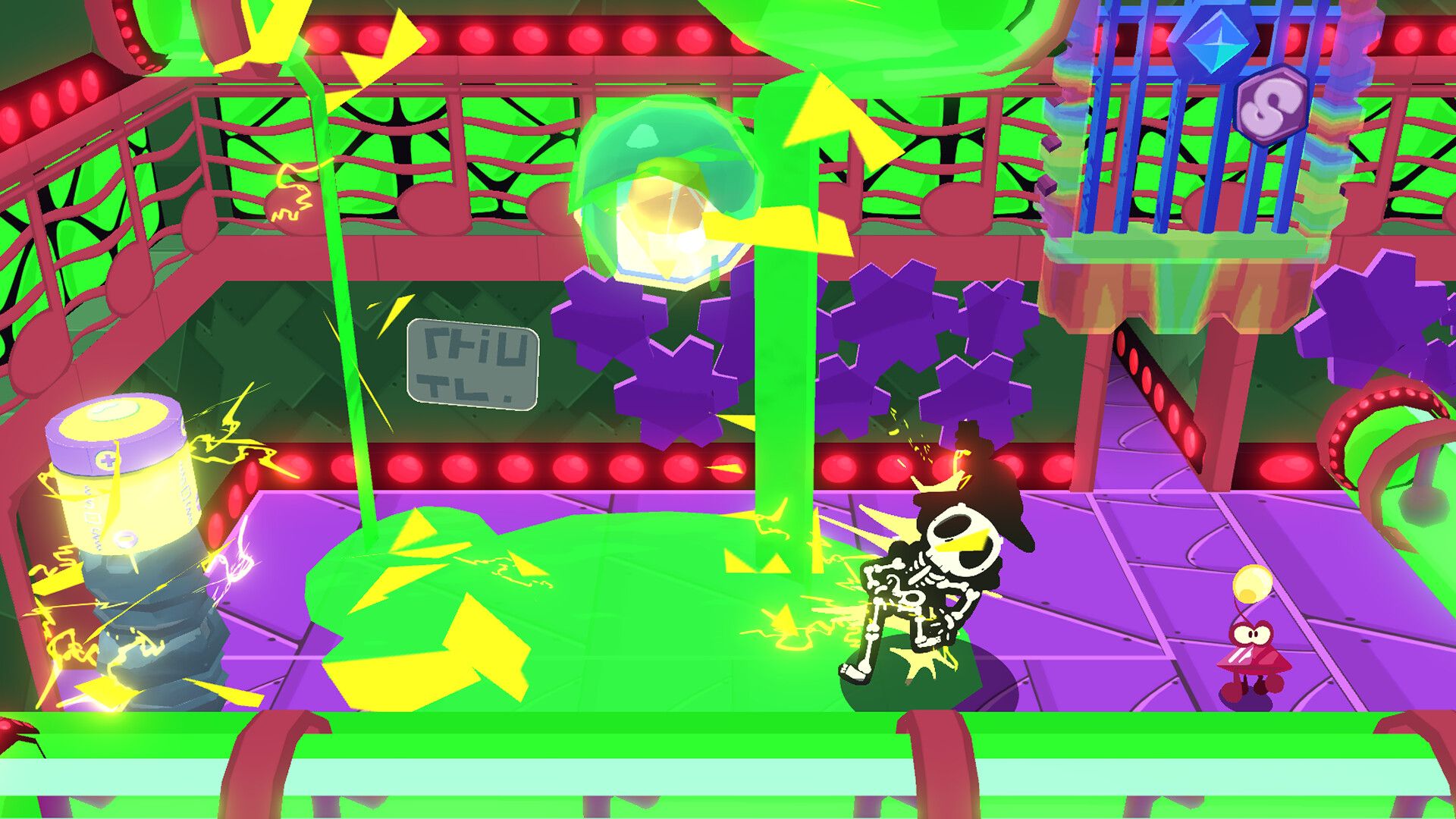
The game’s spell system is its beating heart. Fire can melt ice, smoke can obscure vision, and goo can turn enemies into temporary platforms. But the real genius lies in how these spells interact. Combine push with goo, and an object might not just move—it might bounce in place, creating a rhythmic trigger for a hidden mechanism. Stack fire, smoke, and goo on yourself, and you don’t just become a cloud; you become a living, squishable obstacle that can be reshaped mid-air. The system rewards experimentation, with some combinations yielding predictable results and others revealing hidden mechanics buried in the game’s code.
This depth isn’t just about raw numbers. It’s about emergent gameplay. A door that seems impossible to open might yield to a spell sequence no developer anticipated—a fire spell to weaken a lock, followed by a push to shatter it, then a goo spell to slow the debris. The game’s design philosophy is clear: There’s no one way to solve a puzzle, and that’s the point.*
A Visual and Mechanical Evolution
Visually, *Rhell stands apart from its puzzle-game predecessors. While titles like Scribblenauts relied on flat, papercraft aesthetics, Rhell embraces a hybrid 3D/2D art style. The world is rendered in rich, textured environments—crumbling ruins, misty forests, and mechanical labs—while characters retain a stylized, almost comic-book edge. This contrast isn’t just aesthetic; it serves the game’s mechanics. Players navigate a world where physics and magic collide, and the visual distinction between environment and character ensures clarity in an otherwise chaotic system.
The game’s semi-open structure further distinguishes it from linear puzzle adventures. Players aren’t herded along a predefined path; instead, they’re encouraged to backtrack, re-examine, and approach challenges from unexpected angles. The absence of a traditional tutorial system forces players to learn by doing—combining spells, failing spectacularly, and refining their approach until a solution clicks.
Why It Matters
*Rhell* arrives at a moment when puzzle games are hungry for innovation. Titles like The Witness and Return of the Obra Dinn have set high bars for environmental storytelling and mechanical depth, but few have attempted to weaponize creativity the way Rhell does. By giving players the tools to reshape reality, the game doesn’t just offer solutions—it invites them to become problem-solvers themselves.
For developers, the takeaway is clear: constraints breed creativity. Rhell doesn’t restrict players with rigid rules; it expands their toolkit until the only limit is imagination. And for players, it’s a reminder that the most satisfying puzzles aren’t the ones with a single answer—they’re the ones that make you feel like a magician.
The full game launches March 12, with a demo available now for those eager to test their spellcrafting skills. Whether you’re a puzzle veteran or a casual experimenter, Rhell promises to turn every challenge into an opportunity—and every solution into a moment of discovery.