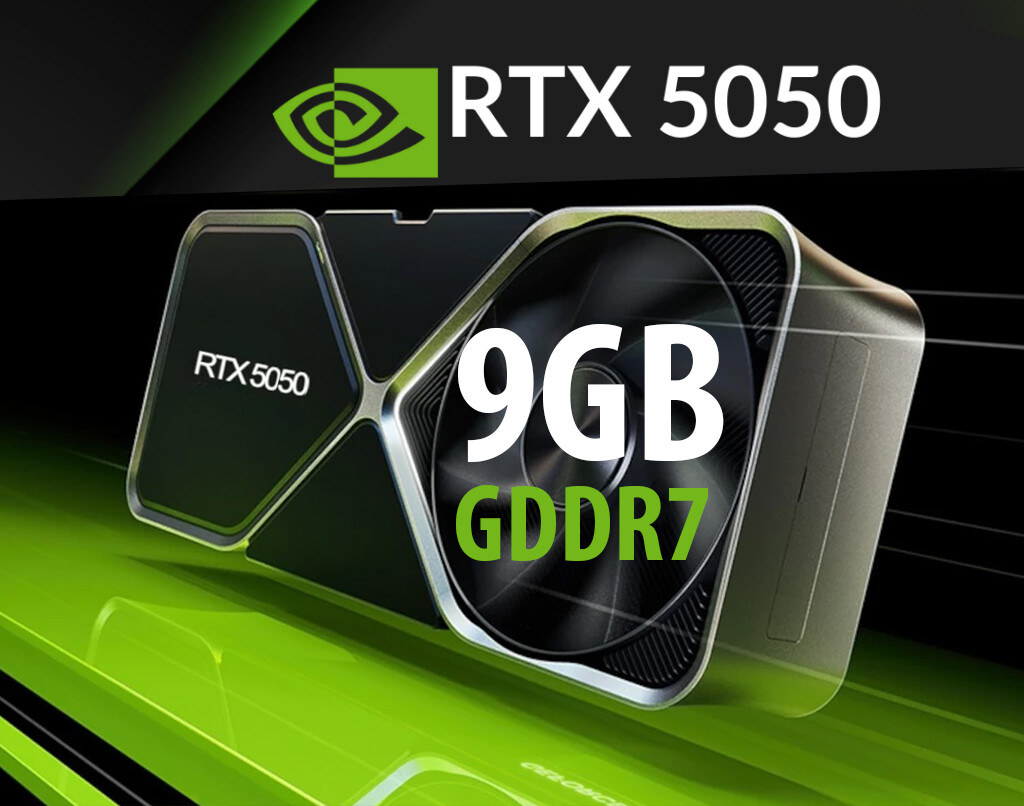
Buyers shopping for an entry-level GPU might soon see a familiar model get a subtle but meaningful upgrade. The GeForce RTX 5050 is reportedly being prepared with a 9 GB GDDR7 configuration, up from the standard 8 GB of GDDR6 in the current version. While the change doesn’t sound dramatic on paper, it reflects broader shifts in how NVIDIA balances performance and supply for its lower-tier GPUs.
The move to GDDR7—known for higher bandwidth and efficiency—could offer a small but noticeable boost in memory performance, even as the memory bus narrows from 128-bit to 96-bit. That trade-off means the new variant would deliver roughly 5% more memory bandwidth (336 GB/s) while adding just over 1 GB of VRAM. For tasks that push the limits of 8 GB—like certain AI workloads or high-resolution rendering—the difference could be meaningful, though real-world gains will depend on how software and drivers adapt.
What’s changing—and what isn’t
The core GPU (GB207) remains unchanged under the Blackwell architecture, maintaining 2560 CUDA cores and a 130 W TDP. Clock speeds are expected to stay the same, so the upgrade is purely about memory capacity and type. The shift also hints at NVIDIA’s response to supply constraints: GDDR7, while more efficient, has been harder to source in volume, suggesting that this variant may be a stopgap rather than a long-term solution.
Higher-tier adjustments on the horizon
If the RTX 5050’s tweak is subtle, changes higher up the stack are more significant. Reports suggest NVIDIA may rework the RTX 5060 to use the larger GB205 die (currently reserved for the RTX 5070) in a downsized configuration. This would reduce CUDA cores from 6144 to 3840 and shrink the memory bus from 192-bit to 128-bit, potentially lowering costs while maintaining compatibility with standard power connectors. The cancellation of the RTX 5060 12 GB variant—previously slated for release—further indicates that NVIDIA is consolidating its lower-tier lineup.
For buyers, the key question isn’t just about VRAM bumps or die changes; it’s whether these adjustments will stabilize prices. Entry-level GPUs have faced supply volatility, and any move to GDDR7 or revised dies could either ease shortages or create new bottlenecks. If the trend continues, we may see more efficiency-focused designs in the future—even if they don’t always feel like breakthroughs.
The RTX 5050’s 9 GB variant isn’t a revolution, but it’s a reminder that small changes can ripple through the market. For now, buyers should watch for price stability and software support as NVIDIA refines its lower-tier strategy.