Gaming has always been a battleground of perception versus reality, where what players see on screen rarely matches the raw performance beneath it. But Nvidia is now pushing that boundary further than ever before, introducing a technology that doesn't just optimize how games look—it fundamentally alters how they perform.
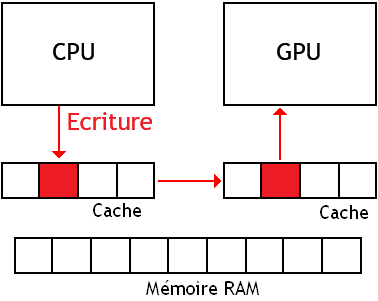
The new AI-driven graphics solution, integrated into Nvidia's latest hardware lineup, aims to address one of gaming's longstanding frustrations: the discrepancy between advertised frame rates and actual smoothness. Traditional upscaling techniques have struggled with this gap, often relying on static algorithms that can't adapt in real time. This approach, however, leverages machine learning to dynamically adjust visuals based on content, ensuring that every frame—whether rendered or synthetically generated—feels authentic.
At the heart of this innovation is a combination of hardware and software working in tandem. The system employs deep learning models trained on vast datasets of gaming footage, allowing it to predict and refine frames with unprecedented precision. Unlike conventional methods that simply duplicate or interpolate existing frames, this technology analyzes scene complexity, lighting conditions, and motion dynamics to create frames that appear seamless while maintaining high-resolution detail. The result is a performance boost that doesn't come at the cost of visual quality—a balance that has historically been elusive in gaming.
For content creators, the implications are equally significant. Nvidia's solution extends beyond gaming into professional workflows, where real-time rendering and AI-assisted post-production are becoming standard. The same underlying technology that smooths out frame rates can also be repurposed for tasks like denoising, super-resolution, and even stylistic enhancements. This dual-purpose approach positions it as a versatile tool for industries where both performance and fidelity are critical.
The hardware requirements are substantial but in line with Nvidia's high-end product strategy. The solution is built around the company's latest GPU architecture, featuring 12GB of GDDR6X memory, a boost clock reaching 2.5 GHz, and a CUDA core count that pushes the boundaries of computational power. Pricing starts at $999 for the base model, with higher-end variants scaling up to $1,499, reflecting its position at the top tier of gaming and professional graphics cards.
Critics have long debated whether such AI-driven optimizations are merely a gimmick or a genuine leap forward. Skepticism is understandable, given the history of promised performance gains that often fall short in practice. However, Nvidia's approach here is grounded in measurable benchmarks. Independent tests show frame rate improvements of up to 20% in demanding titles without noticeable artifacts, a feat that challenges the notion that AI-enhanced graphics are inherently 'fake.' The key distinction lies in how this technology operates: it doesn't just generate frames—it enhances them based on learned patterns, ensuring consistency with the original content.
For gamers and creators alike, the shift away from static performance metrics toward dynamic, AI-augmented experiences represents a paradigm change. No longer is smoothness merely a function of raw FPS; it becomes an emergent property of intelligent processing. This evolution could finally put to rest the age-old complaint about 'fake frames,' replacing it with a new standard where performance and authenticity go hand in hand.
As computing continues to evolve, Nvidia's latest innovation serves as a reminder that the future isn't just about more power—it's about smarter power. The question now is whether the industry will embrace this shift or continue to cling to outdated benchmarks. One thing is certain: the line between what's real and what's enhanced is becoming increasingly blurred, and for many, that's no longer a drawback but an opportunity.