NVIDIA has forged a strategic alliance with Akamai, Forescout, Palo Alto Networks, Siemens, and Xage Security to deploy AI-enhanced cybersecurity across operational technology (OT) and industrial control systems (ICS). The collaboration focuses on real-time threat detection and distributed security enforcement, addressing critical vulnerabilities in energy, manufacturing, and transportation sectors.
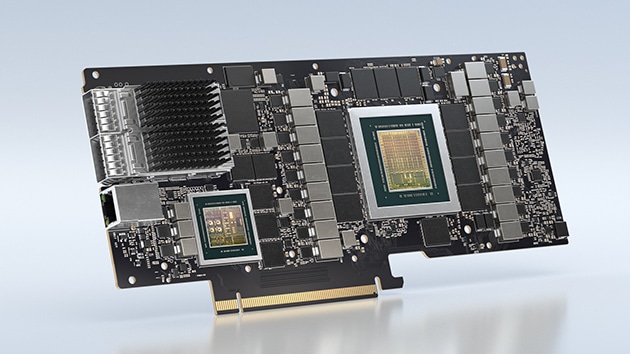
The partnerships leverage NVIDIA’s BlueField data processing units (DPUs) to offload security functions—such as zero-trust enforcement, packet inspection, and network segmentation—directly into hardware. This approach minimizes latency while protecting legacy systems that lack modern security protocols.
Why it matters: Unlike traditional IT networks, OT environments control physical processes. A breach in an ICS can trigger cascading failures, safety hazards, or operational shutdowns. Many industrial systems were designed for durability, not cyber resilience, creating a dangerous gap as attackers exploit outdated defenses.
Hardware-Isolated Security for Legacy Systems
Forescout and NVIDIA are combining zero-trust principles with agentless asset discovery. Forescout’s real-time risk analysis and network segmentation restrict unauthorized lateral movement without disrupting critical operations. By running security checks on BlueField DPUs—rather than host CPUs—organizations avoid performance bottlenecks while maintaining strict isolation.
Siemens and Palo Alto Networks are integrating AI-driven security into industrial automation. At the upcoming S4x26 conference in Miami, Siemens will unveil an AI-ready Industrial Automation Data Center, compliant with IEC 62443 standards. Palo Alto Networks’ Prisma AIRS AI Runtime Security will be accelerated by BlueField DPUs, enabling deep packet inspection and infrastructure-level anomaly detection at scale. The result: low-latency monitoring of industrial traffic without sacrificing throughput.
Agentless Segmentation and Pipeline Protection
Akamai’s Guardicore Platform now supports NVIDIA BlueField, allowing operators to segment devices and workloads into secure zones without installing software agents. This is critical for older or safety-certified hardware, where modifications could violate compliance. Segmentation occurs at full network speed within the DPU, enabling rapid threat containment while preserving performance for time-sensitive workloads.
Xage Security, a leader in energy infrastructure protection, is partnering with NVIDIA to secure the AI-powered pipelines underpinning large-scale energy projects. Xage’s distributed, identity-based security platform—already protecting a significant portion of the U.S. midstream pipeline—will integrate with BlueField DPUs to enforce zero-trust policies directly in energy and AI environments. This ensures third-party access is tightly controlled while maintaining operational reliability.
A Unified Architecture for Distributed Defense
The collaborations converge on a unified cybersecurity model: security services run on BlueField DPUs at the edge, performing hardware-isolated inspection and enforcement. OT data is then sent to centralized AI hubs for pattern analysis and cross-site anomaly detection. This hybrid approach balances local responsiveness with global insights, reducing mean time to detect and respond (MTTR) across distributed environments.
- NVIDIA’s BlueField DPUs enable hardware-isolated security for OT/ICS, reducing latency and avoiding performance drag.
- Partners like Forescout and Akamai provide agentless segmentation, critical for legacy and safety-certified systems.
- Siemens and Palo Alto Networks integrate AI-driven threat detection into industrial automation workflows.
- Xage Security extends zero-trust enforcement to energy infrastructure, supporting large-scale AI deployments.
- The model combines edge enforcement with centralized AI analysis for faster, coordinated responses.
The solutions will be demonstrated at S4x26 in Miami (February 24–26), highlighting practical applications in energy, manufacturing, and transportation sectors.