For decades, Mac users have accepted that their desktop experience would lag behind the precision they expect from Apple hardware. That gap is closing with the MSI PRO MAX series, which treats the monitor as an extension of a MacBook rather than just another device on the desk.
The new line—centered around models like the 271UPXW and 271QPHW E14—combines 4th-gen QD-OLED panels with MSI’s M-Mate app, designed to mirror Apple’s color consistency and connectivity. The result is a display that doesn’t just match MacBook standards; it sets them.
Key Specifications
- Panel: 4th-gen QD-OLED with DarkArmor film (40% deeper blacks)
- Resolution: 4K (3840 × 2160), 166 PPI pixel density
- Refresh Rate: Up to 144 Hz (select models)
- Color Accuracy: PANTONE Validated, Delta-E ≤ 2, PANTONE SkinTon Validated
- Connectivity: Dual USB-C with 98 W / 15 W power delivery, single-cable solution for data and video
- Ergonomics: Adjustable stand, Circular Polarized panel (EyesErgo+), hardware-level blue-light reduction
The 27-inch 4K panels deliver pixel density close to Apple’s Liquid Retina displays, ensuring crisp text and sharp visuals. The DarkArmor film enhances contrast, while PANTONE validation guarantees color fidelity across workflows—critical for designers who switch between MacBook and desktop without losing visual integrity.
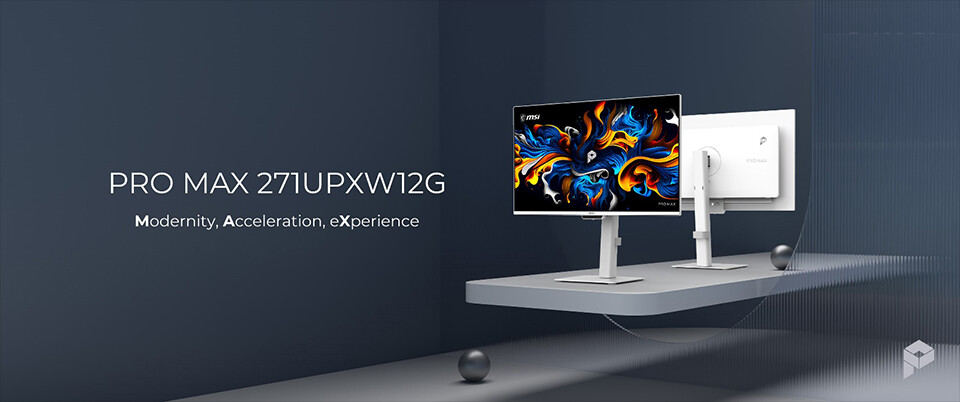
Where the series stands out is in its approach to platform lock-in. M-Mate syncs color profiles and monitor settings across devices via software, eliminating the need to manually adjust displays when switching between a MacBook, Mac Studio, or iPad. This level of integration is rare outside Apple’s own ecosystem, positioning MSI as a direct competitor to high-end Apple monitors like the 5K Studio Display.
Market Implications
The PRO MAX series targets professionals who demand both precision and flexibility. The dual USB-C power architecture (98 W for full performance, 15 W for standby) reduces cable clutter while supporting 4K output—something Apple’s current lineup doesn’t match in terms of portability. However, the lack of a 6K option or native Thunderbolt support means it won’t replace the Studio Display for those who prioritize resolution over refresh rate.
For creators, the tradeoff is clear: MSI offers higher brightness consistency (via Uniform Luminance) and ergonomic features like the Circular Polarized panel, which mimics natural light to reduce eye strain. The 144 Hz option in select models also suggests a shift toward more dynamic workflows, though Apple’s focus on static color accuracy remains unmatched.
Availability and pricing are not confirmed, but given the target audience, these displays will likely sit at the premium end of the market—potentially competing with Apple’s own monitors while filling a niche for those who need multi-device KVM control without sacrificing color science.