Marathon has quietly established itself as a notable market performer just three weeks after launch, with an estimated 1.2 million units sold across PC, PlayStation 5, and Xbox Series platforms. The game’s consistent daily player count—hovering between 28,000 and 40,000 active users—suggests a strong initial reception that has sustained momentum without the usual post-launch volatility.
The bulk of those sales came through Steam, where the game is estimated to have sold around 800,000 copies. PlayStation 5 accounted for roughly 217,000 units, while Xbox Series platforms saw about 133,000 sales. These figures, drawn from analytics data, highlight a platform split that leans heavily toward PC, particularly Steam, which has historically been a dominant force in multiplayer first-person shooters.
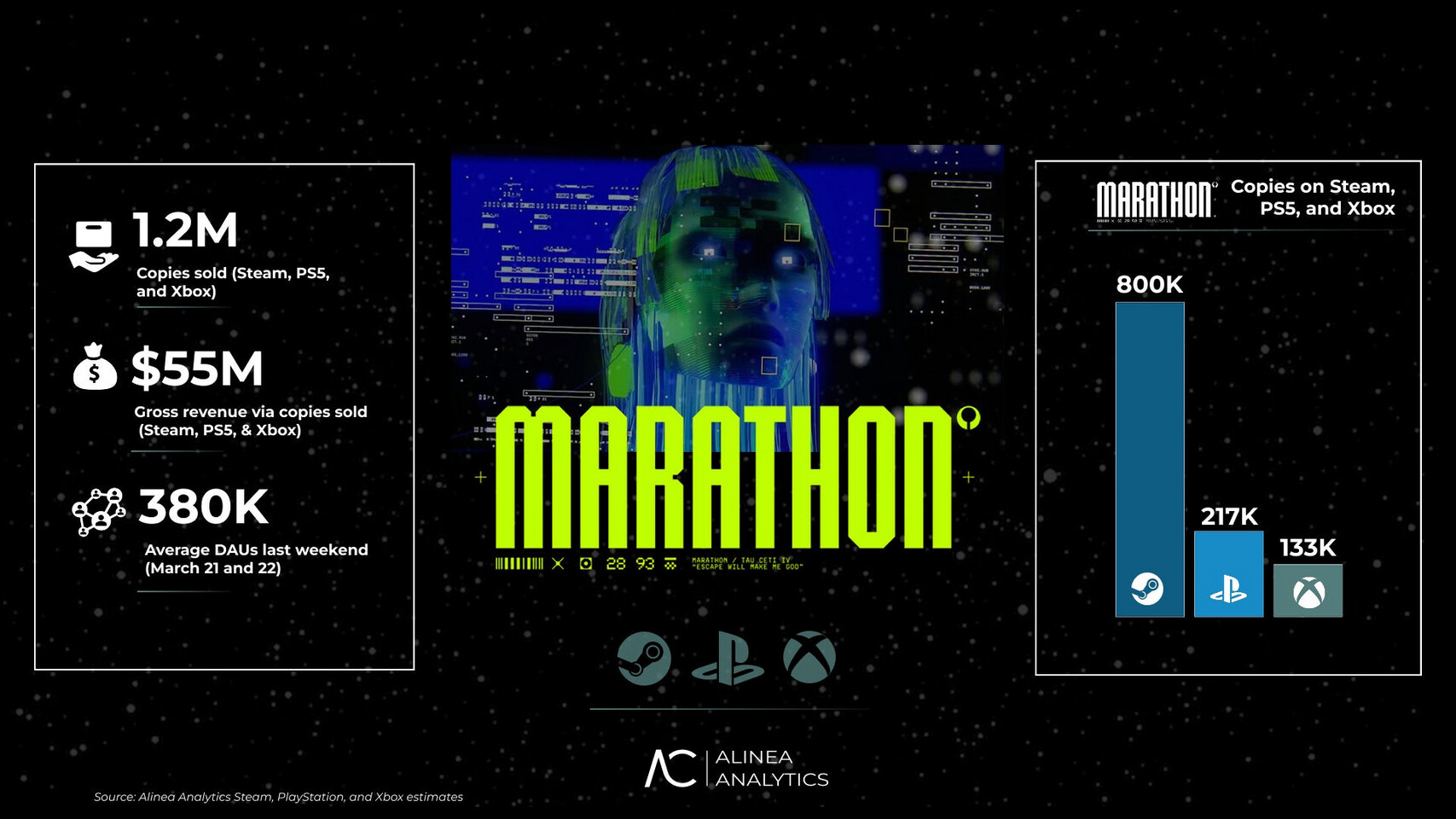
- Estimated Sales: 1.2 million units total
- Platform Breakdown:
- Steam: ~800,000 units (67% of total)
- PlayStation 5: ~217,000 units (18%)
- Xbox Series X/S: ~133,000 units (11%)
- Revenue: $55 million across all platforms
- Daily Concurrent Players: 28,000–40,000
The data also points to a significant overlap with Bungie’s previous titles. A substantial portion of Marathon’s player base—78.2% on Steam—had previously played Destiny 2, while 62.7% had experienced Helldivers 2 and 55.9% Arc Raiders. These percentages suggest that Bungie’s reputation as a developer of high-quality first-person shooters may have played a key role in drawing players to Marathon.
While the game has not yet launched on last-gen consoles, speculation persists about potential future releases. However, no official confirmation or timeline has been provided, leaving that possibility in an uncertain state for now.
For PC builders and hardware enthusiasts, Marathon’s success underscores the continued importance of robust gaming platforms, particularly those with strong HDMI 2.1 support—a feature increasingly critical for modern multiplayer experiences. The game’s stable player base and revenue figures serve as a benchmark for how well-optimized titles can perform in competitive markets, offering insights into what drives sustained engagement in today’s gaming landscape.