The transition from flat mice to vertical trackballs is not merely about comfort—it's a fundamental rethinking of how precision input devices function in professional environments. The Pro Fit Ergo TB675 series embodies this shift, but it does so with an implicit challenge: can ergonomic design coexist with the performance demands of modern multi-device workflows without compromise?
At its core, the TB675 is built around a 60-degree vertical orientation, intended to accommodate average hand sizes while maintaining smooth cursor control. It supports four discrete DPI settings (400, 800, 1200, and 1600), catering to tasks ranging from fine detail work in CAD applications to broader movements in spreadsheet management. A metal 4D scroll wheel provides both horizontal and vertical scrolling, but the device's true innovation lies in its connectivity options.
The wireless variant employs a 2.4 GHz radio frequency for data transmission, paired with 128-bit AES encryption for security. It also includes dual Bluetooth support, allowing seamless switching between devices, and a USB-C charging port that promises up to four months of battery life on a single charge. The wired version eliminates the need for batteries altogether, instead relying on a direct USB-C connection with an included USB-A adapter for compatibility.
This dual-approach addresses a persistent gap in input device design: traditional trackballs often lack intuitive thumb placement, while flat mice can contribute to wrist strain during prolonged use. The TB675 aims to resolve this by prioritizing ergonomic positioning without sacrificing the precision required for demanding tasks.
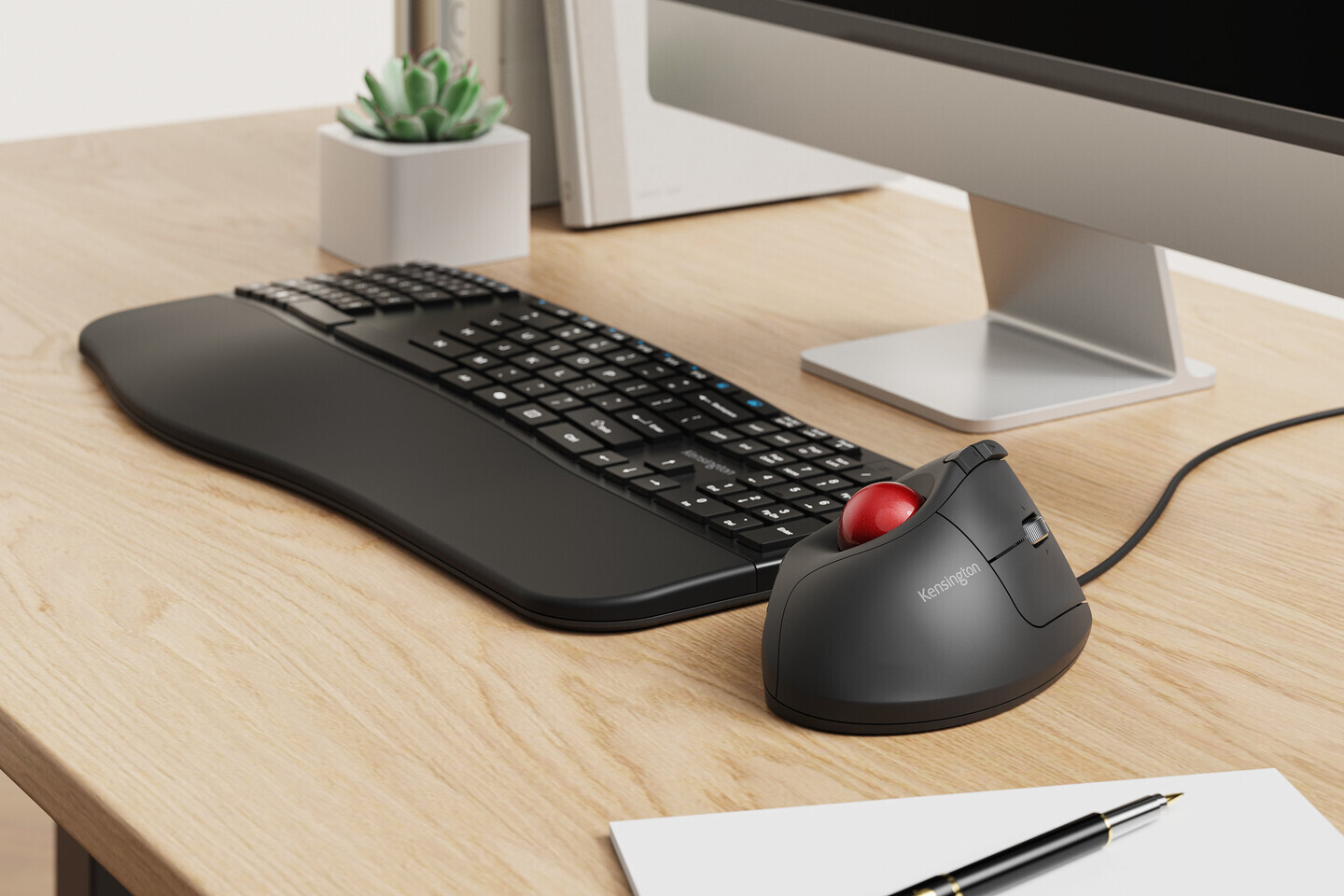
However, the trade-offs are unavoidable. Wireless convenience introduces battery life considerations, which may not align with the uninterrupted workflows of professional settings. Meanwhile, the wired version offers reliability but restricts multi-device functionality, a feature increasingly expected in hybrid work environments. The wireless model's inclusion of a 2.4 GHz dongle and Bluetooth support is a step forward, yet its ability to displace wired setups in enterprise contexts remains an open question.
Beyond its physical design, the TB675 includes nine programmable buttons, customizable through Kensington Konnect software, and a patented push-button mechanism for trackball ejection, simplifying maintenance. Both models are backed by a three-year warranty, reinforcing their positioning as professional-grade tools. Yet, the core question persists: will users be willing to adopt a device that prioritizes ergonomics over familiarity when the performance advantages are not immediately apparent?
The TB675's specifications—60-degree vertical design, four DPI settings, 128-bit encryption wireless connectivity, and wired reliability with USB-C compatibility—are clear. What remains uncertain is whether its ergonomic benefits will be sufficient to overcome the learning curve for long-term productivity in environments where multi-device workflows are standard.