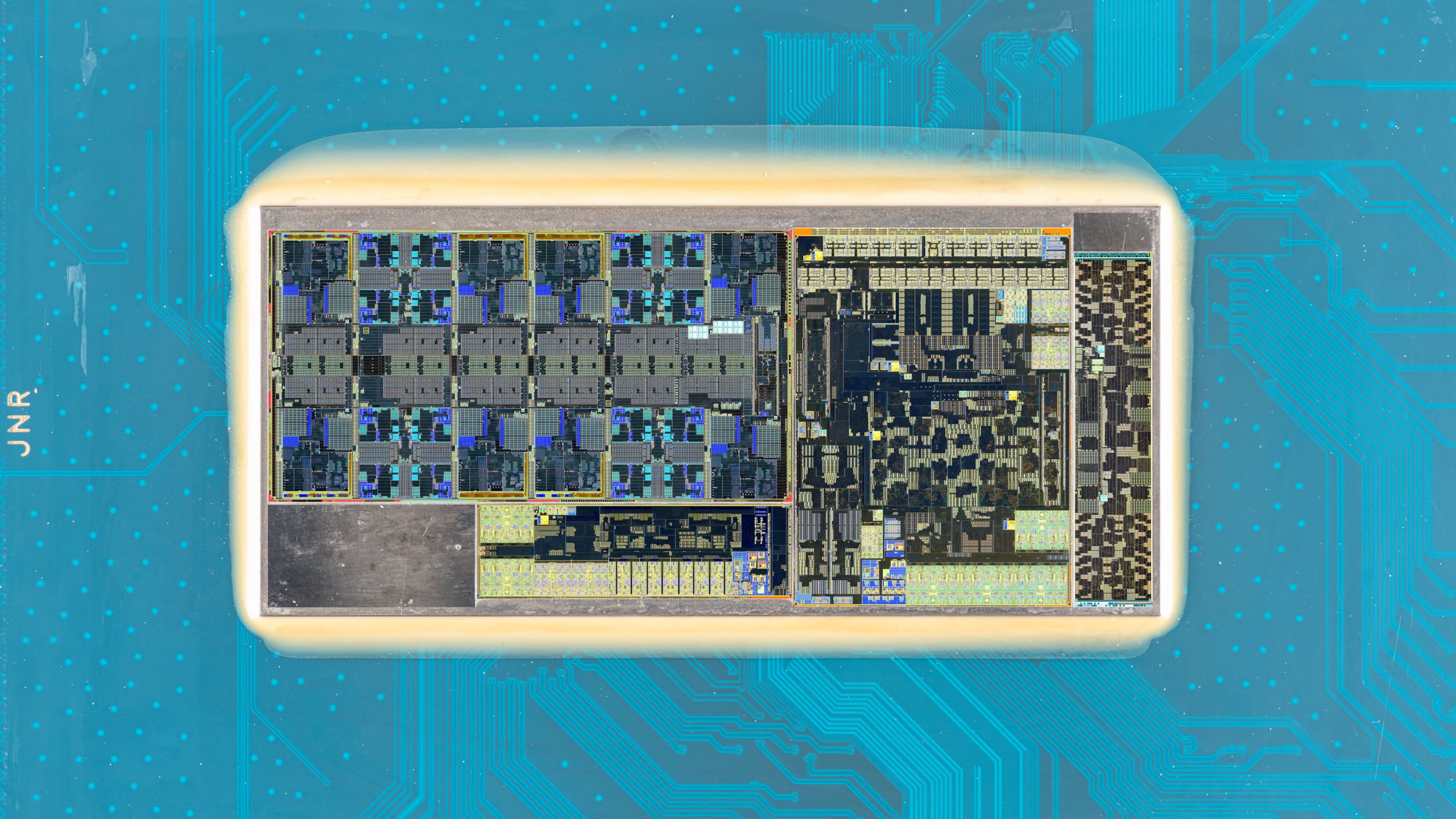
Intel’s next-generation Nova Lake processors are taking shape with a bold architectural twist: the introduction of ‘big last-level cache’ (bLLC) variants designed to rival AMD’s Ryzen 7 9800X3D and its V-cache technology. Unlike AMD’s approach—where a separate slice of cache is bonded to the CPU die—Intel is embedding the additional cache directly into the silicon, resulting in a significantly larger die area.
According to recent leaks, the standard Nova Lake die measures approximately 110 mm² when built on TSMC’s advanced N2 process. However, the bLLC variant jumps to roughly 150 mm²—a 36% increase in size. For comparison, AMD’s Zen 5-based Ryzen 7 9800X3D die is far smaller at 71 mm², though it lacks the hybrid 8+16 core configuration of Nova Lake’s 24-core design.
This expansion isn’t just about brute force; it’s a strategic move to deliver gaming performance comparable to AMD’s X3D chips. The bLLC variant is expected to feature 144 MB of last-level cache, doubling the 64 MB of V-cache found in AMD’s Ryzen 7 9800X3D (which also includes an additional 32 MB of on-die L3). Intel’s approach leverages TSMC’s N2 node for the larger dies, a process node two generations ahead of AMD’s N4-based Zen 5, offering higher transistor density and efficiency.
The shift to TSMC for high-end Nova Lake variants mirrors Intel’s Panther Lake strategy, where the larger iGPU versions were outsourced to TSMC’s N3 node while smaller variants remained in-house. This hybrid production model allows Intel to balance scalability with performance, ensuring the bLLC models can meet gaming demand without sacrificing manufacturing flexibility.
Who Stands to Benefit?
The bLLC Nova Lake chips are poised to redefine high-end gaming CPUs, directly targeting enthusiasts and content creators who rely on AMD’s Ryzen 7 9800X3D for its unparalleled single-threaded and cache-heavy workload performance. With 144 MB of L3 cache—nearly triple the 32 MB found in AMD’s Zen 5 non-X3D parts—Intel’s bLLC variants could close the gap in latency-sensitive applications like high-refresh gaming and rendering.
However, the tradeoff is clear: larger dies mean higher costs and potentially reduced yields. Whether Intel can offset this with TSMC’s efficiency gains remains to be seen. For now, the bLLC Nova Lake chips represent Intel’s most aggressive play in the gaming CPU space since the launch of its 13th Gen Raptor Lake series, with a launch expected later this year.
Key Specs
- Die Size: Standard Nova Lake: ~110 mm² | bLLC Nova Lake: ~150 mm² (+36%)
- Process Node: TSMC N2 (bLLC) / Intel 18A (standard)
- Cache: 144 MB bLLC (embedded) vs. AMD’s 64 MB V-cache + 32 MB L3
- Core Configuration: 8 Performance Cores + 16 Efficient Cores
- Target Platform: High-end gaming and content creation (direct competitor to Ryzen 7 9800X3D)
The bLLC Nova Lake chips are not yet confirmed for an immediate release, but if they materialize, they could mark a turning point in Intel’s push to reclaim the gaming CPU throne. With AMD’s Zen 6 V-cache successors likely on the horizon, the battle for cache supremacy is far from over.