When pushing hardware beyond its intended limits, the risks are rarely subtle. A recent experiment with a Gigabyte GeForce RTX 5090 GPU turned into a cautionary tale: after adding a second 12V-2x6 power connector and shunt-modding the card, the PCB suffered severe damage, with two distinct holes burned through the board while the fans remained stubbornly inactive.
The modder, known as Frame Chasers, had already confirmed that some Gigabyte RTX 5090 variants include the PCB footprint for a secondary connector near the right side of the board. The goal was to draw more stable power without overloading a single 16-pin connection—a common workaround among enthusiasts seeking to maximize performance. However, the combination of the shunt mod and the added connector created a scenario where the GPU’s power draw exceeded safe thresholds even at idle.
Despite the system being in idle mode, the NVIDIA Control Panel was set to Performance mode, forcing the GPU to operate as if under load. This triggered excessive power consumption, but the fans failed to engage, leaving the PCB to overheat uncontrollably. The result was visible damage: two holes burned through the board and a capacitor blown from its position. Remarkably, the GPU’s core and VRAM appeared undamaged, raising the possibility of salvaging the components for reuse on another PCB.
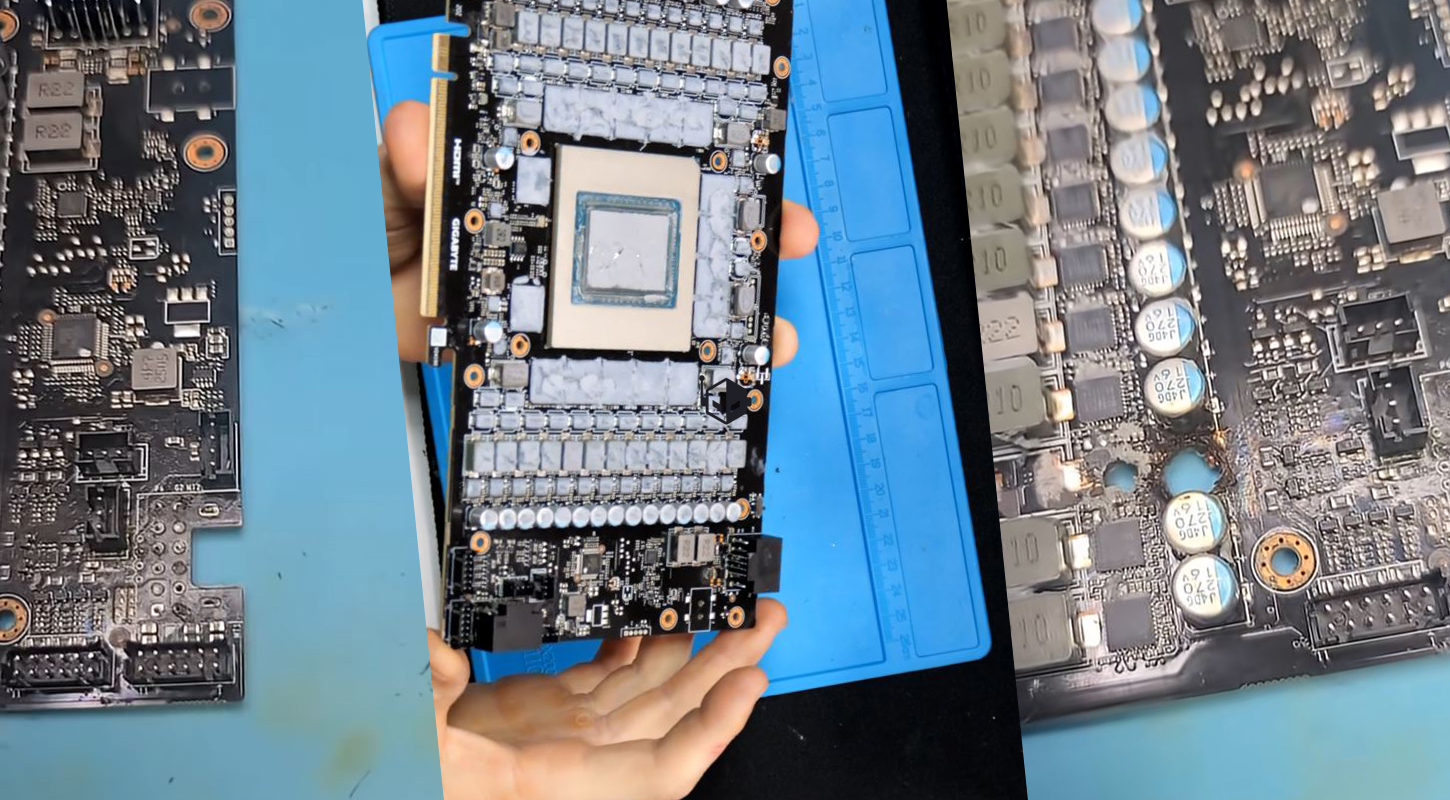
The incident underscores a critical warning for modders and overclockers: even minor tweaks can lead to catastrophic failures when combined with unstable power delivery or firmware quirks. Gigabyte’s RTX 5090, already notorious for its power demands, becomes a high-stakes experiment when modified beyond factory specifications.
Key specs of the affected GPU
- Model: Gigabyte GeForce RTX 5090
- Modifications: Added 12V-2x6 power connector + shunt mod
- Failure mode: Burned PCB holes, failed fan response, capacitor damage
- Observation: GPU core and VRAM intact post-failure
The modder has since sent the damaged unit to hardware repair specialist NorthWestRepair, where attempts may be made to recover the functional components. For most users, this serves as a stark reminder that extreme modifications carry inherent risks—especially when dealing with GPUs already operating at the edge of their power limits.
This isn’t an isolated case. Earlier reports highlighted issues with MSI’s 16-pin connectors detaching under high loads, further illustrating the fragility of high-power setups. The RTX 5090, with its insatiable appetite for wattage, remains a double-edged sword: capable of delivering unparalleled performance but demanding meticulous handling to avoid self-destruction.