For industries where even trace amounts of silicone can disrupt performance—think satellite arrays, medical imaging equipment, or military-grade processors—thermal management has always been a balancing act. Gallop Innotek’s latest innovation, the GTP160-NS, redefines that balance by eliminating silicone entirely from its thermal gap pad formulation. The result is a material designed to meet the exacting demands of applications where contamination, brittleness, or electrical leakage could spell failure.
Silicone has long been the go-to material for thermal gap pads due to its high thermal conductivity and flexibility. But in environments where siloxane residues interfere with optics, degrade electrical insulation, or trigger material incompatibility, engineers have had few alternatives. Gallop’s new pad replaces silicone with a blend of acrylic and urethane polymers, a shift that addresses a critical gap in thermal management for industries where purity is non-negotiable.
The Problem Silicone Creates—and How This Solves It
Silicone out-gassing and bleeding have plagued industries where even microscopic contamination can lead to catastrophic failures. For example
- Optical systems: Silicone residues can scatter light or alter refractive indices, degrading precision in lasers or imaging equipment.
- Medical devices: Silicone degradation can leach harmful byproducts or interfere with sterilization processes.
- Aerospace and defense: High-voltage systems (like those in satellites or radar) require insulation that won’t degrade under extreme conditions.
The GTP160-NS tackles these challenges head-on with a non-silicone formulation that maintains thermal conductivity while introducing features tailored for sensitive applications. Key among these is its high dielectric strength of 6 kV/mm, a critical specification for electrical insulation in high-voltage environments. Even at sustained temperatures of 125°C, the material retains flexibility and resists brittleness for over 1,000 hours—a durability benchmark that rivals or exceeds many traditional silicone-based pads.
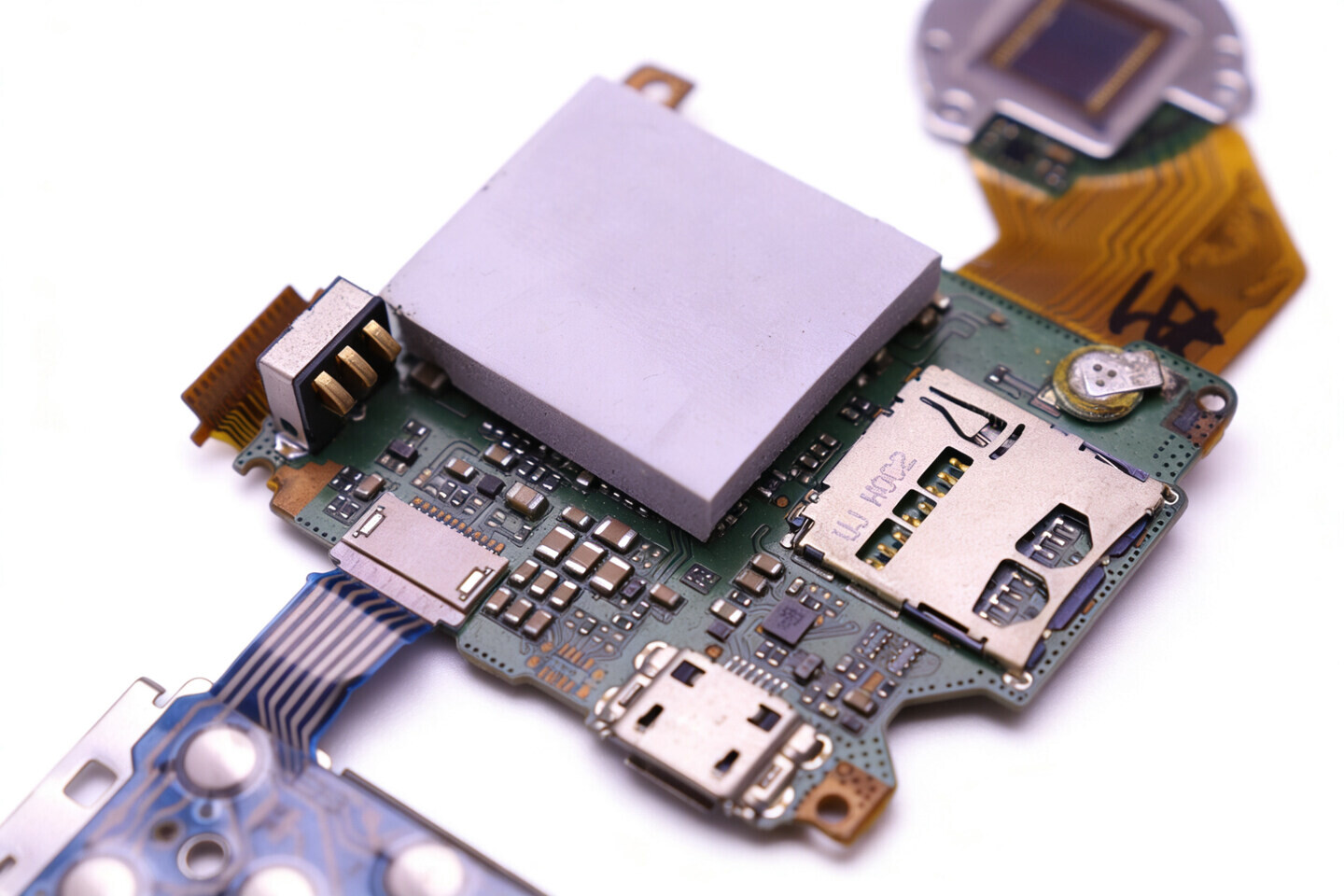
Performance That Pushes Industry Standards
Where traditional thermal pads might compromise on one metric to gain another—such as sacrificing flexibility for thermal conductivity or insulation for ease of application—the GTP160-NS delivers across multiple fronts. Its low Total Mass Loss (TML) of less than 1.5% ensures minimal out-gassing, a critical factor in vacuum-sealed or hermetically enclosed systems. Meanwhile, its adjustable hardness range (10 to 00 Shore) allows engineers to fine-tune deflection under load, making it suitable for delicate printed circuit boards (PCBs) or integrated circuits (ICs) where even slight pressure could cause damage.
Vibration damping is another area where the GTP160-NS excels. By compensating for mechanical stress without the rigidity of traditional pads, it extends the lifespan of components in environments prone to shock or rapid temperature fluctuations—think drone propulsion systems or automotive electronics.
Who Stands to Benefit—and Why It Matters
This isn’t just an incremental upgrade; it’s a reimagining of thermal management for niche but high-impact industries. For manufacturers of
- High-end electronics: Custom pads can be tailored to fit intricate heat dissipation needs without risking silicone contamination in sensitive signal paths.
- Military and aerospace: The combination of insulation, thermal endurance, and vibration resistance aligns with the rigorous standards of defense contractors and satellite builders.
- Medical and optical: Laboratories and equipment manufacturers can now integrate thermal solutions without worrying about material interference in precision applications.
The pad’s versatility isn’t limited to off-the-shelf use. Gallop Innotek emphasizes its ability to provide custom formulations, allowing clients to specify exact thermal and mechanical properties for their unique use cases. This level of customization is particularly valuable in prototyping or low-volume production where standard materials fall short.
For industries where failure isn’t an option, the GTP160-NS represents a paradigm shift. It’s not just about replacing silicone; it’s about redefining what thermal management can achieve when contamination, reliability, and precision are paramount.
Availability and pricing details have not been disclosed at this time.