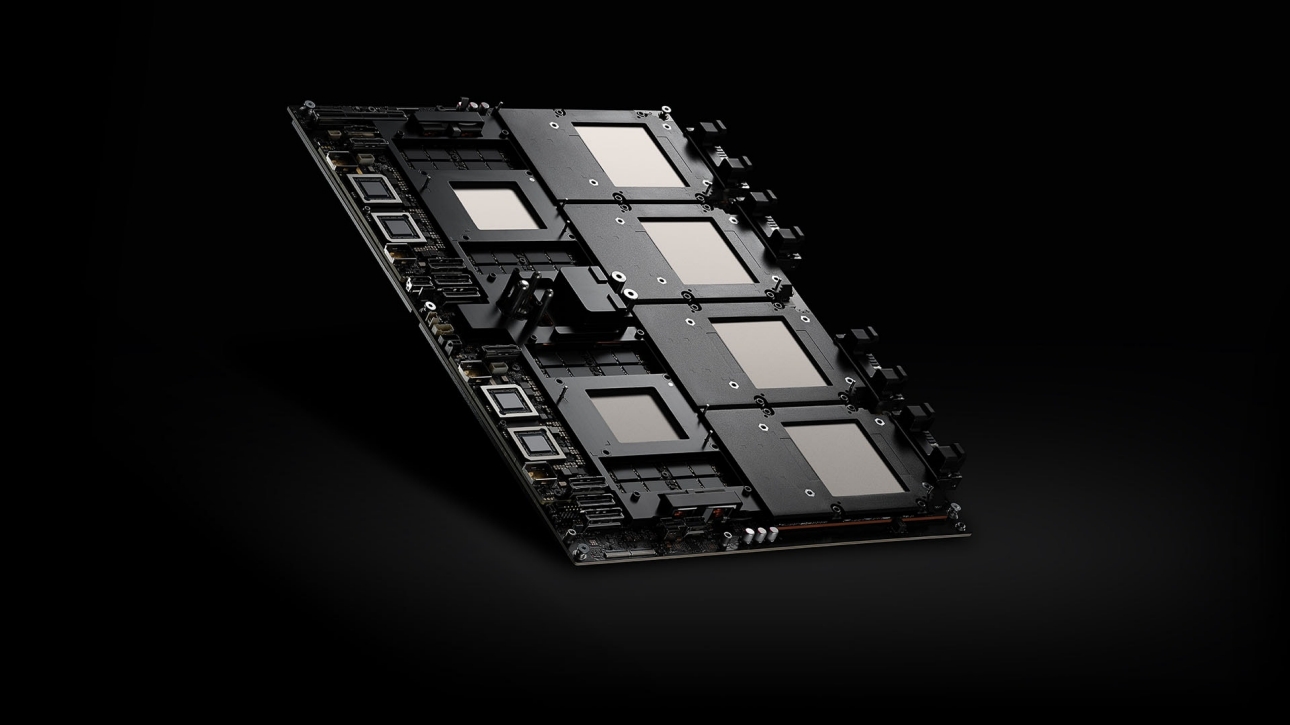
ASUS is doubling down on liquid cooling for AI and high-performance computing (HPC) with a new framework of purpose-built solutions, designed to handle the extreme heat and density of next-generation data centers. The company’s ASUS Optimized Liquid-Cooling Solutions combine direct-to-chip (D2C) cooling, in-row CDU-based architectures, and hybrid setups—all engineered to support NVIDIA’s NVL72 and HGX H200 systems while slashing energy waste and operational costs.
The push comes as AI workloads push traditional air-cooling systems to their limits. ASUS’s approach integrates precisely controlled thermal management with scalable infrastructure, leveraging partnerships with Schneider Electric, Vertiv, Auras Technology, and Cooler Master to deliver validated, high-density rack solutions.
Why Power Users and Data Center Operators Should Care
For those running or deploying AI clusters, ASUS’s solutions offer three key advantages
- Direct-to-chip cooling: Eliminates hotspots by routing liquid directly to CPUs, GPUs, and accelerators, enabling rack densities that air-cooled systems can’t match.
- In-row CDU integration: Centralized liquid distribution units (CDUs) placed within the rack reduce plumbing complexity and improve efficiency for large-scale deployments.
- Hybrid flexibility: Combines liquid and air cooling where needed, allowing operators to optimize for specific workloads without overhauling their infrastructure.
ASUS’s benchmarking claims are backed by hard numbers: 2,156 SPEC CPU® records and 248 MLPerf™ top spots, proving its cooling solutions can sustain peak performance under heavy AI and HPC loads.
The Real-World Test: Taiwan’s First Fully Liquid-Cooled NVL72
ASUS’s expertise is already in action at the National Center for High-Performance Computing (NCHC) in Taiwan, where it deployed the country’s first fully liquid-cooled NVIDIA GB200 NVL72 supercomputer. The system features
- A dual-compute architecture pairing NVIDIA’s HGX H200 cluster with the NVL72.
- Direct liquid cooling (DLC) applied to every major component, achieving a PUE of 1.18—among the most efficient in the industry.
- End-to-end engineering by ASUS, from thermal design to power distribution, ensuring stability at scale.
This deployment isn’t just a proof of concept; it’s a blueprint for how liquid cooling can reduce energy consumption by up to 30% in AI data centers while supporting higher rack densities than air-cooled alternatives.
Advanced Knobs and Customization
For operators looking to fine-tune their setups, ASUS’s liquid-cooling portfolio includes

- Modular CDU sizing: Scalable from small in-row units to large centralized systems, allowing incremental upgrades.
- Variable flow control: Dynamic liquid distribution to match workload demands, reducing energy use during idle periods.
- Hybrid cooling zones: Mixed liquid/air cooling within the same rack, enabling targeted thermal management for different components.
- Precision monitoring: Integrated sensors and ASUS’s AI-driven thermal analytics to predict and prevent overheating before it occurs.
These features make ASUS’s solutions particularly appealing for AI training clusters, HPC rendering farms, and edge data centers where every watt of power and degree of cooling matters.
Limitations and Considerations
While ASUS’s liquid-cooling solutions offer significant advantages, they’re not without challenges
- Upfront cost: Liquid-cooling systems require higher initial investment compared to air-cooled racks, though long-term energy savings often offset this.
- Plumbing complexity: Large deployments demand careful planning for liquid lines, pumps, and containment—ASUS’s partner ecosystem aims to simplify this.
- Maintenance: Regular fluid checks and potential leaks require operational discipline, though ASUS’s hybrid designs can mitigate some risks.
For smaller deployments or budget-conscious operators, ASUS also offers semi-immersion and rear-door heat exchanger (RDHE) options that balance performance with simplicity.
What’s Next: GTC 2026 and Beyond
ASUS will showcase its liquid-cooling ecosystem as a Diamond Sponsor at NVIDIA GTC 2026 (March 16–19 in San Jose), emphasizing ‘Trusted AI, Total Flexibility.’ The company will demonstrate live cooling setups, benchmark comparisons, and real-world case studies—including the NCHC deployment—highlighting how its solutions integrate with NVIDIA’s latest hardware.
Looking ahead, ASUS’s strategy hinges on three pillars: expanding its partner network to include more infrastructure providers, refining hybrid cooling for mixed workloads, and pushing PUE benchmarks below 1.2 in future deployments. With AI demand surging, the company’s focus on thermal efficiency, scalability, and sustainability positions it as a key player in the next wave of data center innovation.
For operators eyeing high-density AI clusters, ASUS’s liquid-cooling solutions may offer the thermal headroom—and energy savings—to justify the leap from air to liquid.