In the world of extreme hardware pushing, few milestones are as dramatic as a GPU overclocking world record—yet AMD’s latest achievement feels strangely understated. While the company and overclocking legend Allen 'Splave' Golibersuch managed to coax a Radeon RX 9060 XT to 4.77 GHz, the announcement arrives with little fanfare, no benchmark data, and no clear answers about how the feat was validated.
The result is a 52% increase over the card’s stock clock speeds—a staggering jump that would have been front-page news in the late 1990s when pushing a 150 MHz Nvidia Riva TNT2 Ultra to 190 MHz felt like a triumph. Yet today, AMD’s acknowledgment of the record comes in the form of a two-minute YouTube video, buried on its gaming channel, with no accompanying technical breakdown or official certification.
What’s more, the video itself shows GPU-Z displaying specs for an RX 7600 XT—not the RX 9060 XT being overclocked. The discrepancy, if unintentional, adds to the confusion. Without transparency on testing methods, stability benchmarks, or the exact configuration used, the claim sits in a gray area. Unlike CPU overclocking records, which are rigorously tracked by organizations like HWBot, GPU records remain unofficial, leaving AMD’s assertion as little more than a self-reported claim.
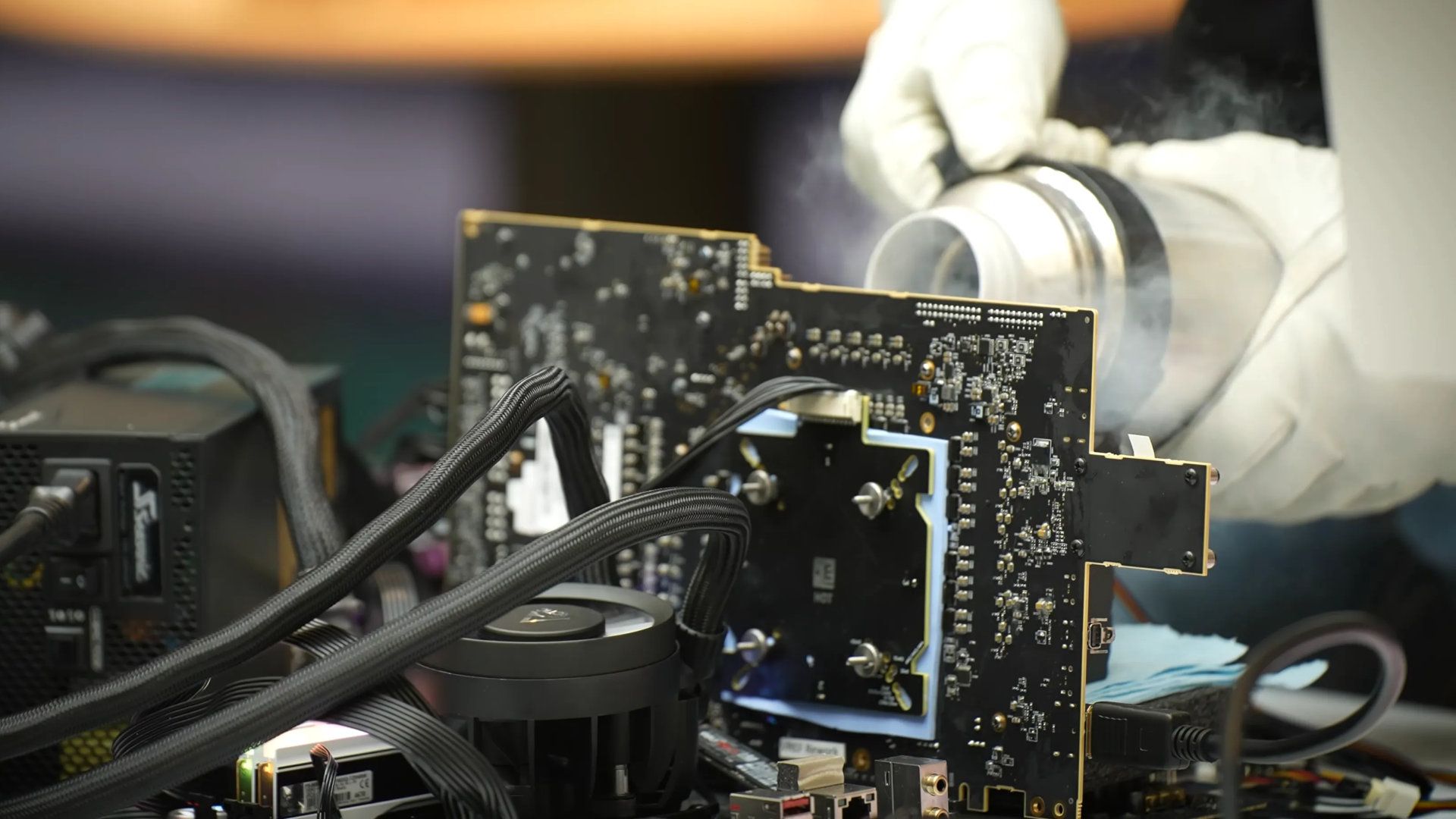
The hardware itself—a Radeon RX 9060 XT—was stripped of its stock cooler and submerged in liquid nitrogen, a common extreme-cooling method for record attempts. The Navi 44 architecture, already capable of high clock speeds, appears to have responded well, but the lack of deeper technical engagement from AMD is puzzling. For a company that has long championed performance and innovation, this feels like a missed opportunity to showcase both its engineering prowess and the potential of its latest GPUs.
Splave’s reputation as one of the most skilled overclockers in the world lends credibility to the result, but the absence of follow-up questions—such as why the team didn’t attempt higher clocks or what real-world performance gains were observed—leaves enthusiasts and journalists scrambling for answers. The feat itself is undeniably impressive, but the execution feels half-hearted, as if AMD doesn’t quite know how to market extreme overclocking in an era where even casual users expect detailed benchmarks and transparency.
For now, the record stands as a testament to what’s possible with liquid nitrogen and expert tuning, but without further context, it’s hard to separate spectacle from substance. One can’t help but wonder: if this were a CPU record, would AMD have treated it with the same quiet indifference?